What is it like to be an independent artist in the current music industry?
“I think depending on what your goals are and where you are in your musical career, being an independent artist can be extremely liberating. You get to call all the shots. What’s more, only a few decades ago, artists needed labels in order to release music; they needed finances to book a studio and record an album, and they needed radio support.
However, today, artists can record and release music whenever they like, with next to no money. Artists can get their music distributed through every digital store without the help of a label, post videos on YouTube, create content, get playlisted, and get their music heard by millions of people. Artists have the possibility to create something that goes viral and potentially have more reach, more views and more fans than signed artists.
There are obviously advantages to being signed too, especially when it comes to touring, marketing, network and career support. Both situations have their pros and cons, and I think it depends on what your goals are and how you wish you see things.“
Do you feel like enough is done to promote independent artists?
“I think the responsibility lies 100% with the artist. There are so many resources out there and, with the sheer volume of music out there, it’s really up to the artist themselves to take the steps to get their music. That’s not to say it’s easy. In fact, often it feels impossible to get your music heard, which can be extremely frustrating.
In terms of other people or organizations promoting independent artists, again, I think there are a lot of resources. There are people everywhere who love discovering new music. These types of people usually have their own blog and/or create playlists on Spotify and they love promoting new and independent artists. They love the discovery aspect. So, I think on the grass roots level, there are a lot people wanting to promote and discover independent music.
Today, there’s a wealth of resources and paid services available to help independent artists promote themselves. Navigating through all these options though can be tricky and time consuming.
Unless you create something that happens to go viral on TikTok or whatever, whether deliberate or by chance, I think hiring a PR company and running ads on Facebook is smart for independent artists to help get their name out there and get their music heard.
So, to conclude, I would say today, independent artists need to actively promote their music – there are tools and resources but it’s to the artists themselves to use them.“

Do you think it’s getting harder/easier to be unsigned?
“There are, of course, pros and cons to being signed and unsigned. The freedom to create music and content whenever you like is obviously a big plus if you’re unsigned. But then getting the support of a label and having a team of people working on your music obviously has it perks. As I mentioned above, I think the responsibility really lies with the artist. You build your own career with our without the help of others.
Thanks to social media, I think unsigned artists have every chance of “blowing up” or creating hype as an artist that is signed to a label. For example, every artist has the possibility to create something that goes viral and create a name overnight.
However, as always, I think labels offer artists a level of support than they may not be able to achieve themselves, not just financially but through the label’s network and established relationships with radio, festivals, magazines etc.
I think a more important question every artist should ask themselves is whether they need or even want to be signed and why. In the case of solo artists in particular, if the goal is simply to record and release music at will and then promote it through your own social networks, then they might find they don’t need a label. Again, all the tools and resources are out there but it takes a lot of work.”
What’s your general songwriting process?
“For me, every song always starts a specific sound and a mood together with a basic chord progression or arpeggio. Sometimes this can be a sound I hear in my head, other times it appears when I’m dabbling with different synth sounds. Suddenly, a mood and chord progression appears. I then add the beat, which dictates the feel and groove. That combination of a sound, mood, groove and initial chord progression becomes the whole foundation for the song from which everything else is built. From there, I begin “vocalising”, trying to find a vocal melody by singing jibberish to specific vowel-sounds. Since the song is always based on mood, the actual story I want to tell becomes apparent really quickly. Bit by bit, lyrics begin replacing the jibberish.”
Is this something that has evolved with time?
“I’ve never really been able to just sit with a guitar or piano and write a song – I mean, sure it has happened and it can happen but it’s not my favourite nor most effective way to work. I always wished I was that type of musician or songwriter where I could just write with a guitar or a piano but it doesn’t really work for me. I’ve almost always thought in terms of production and had a vision for the song. In a sense, the song gets built layer by layer and the production really steers the direction of the song. Even as a teenager playing in my first bands, I always preferred writing songs by myself with the aid of a drum machine. I would often present complete or nearly complete demos to the band to start jamming on. I wanted to make sure that everyone could envision and hear the song I heard in my head. So, in that sense, the way I write songs has pretty much always been the same.”
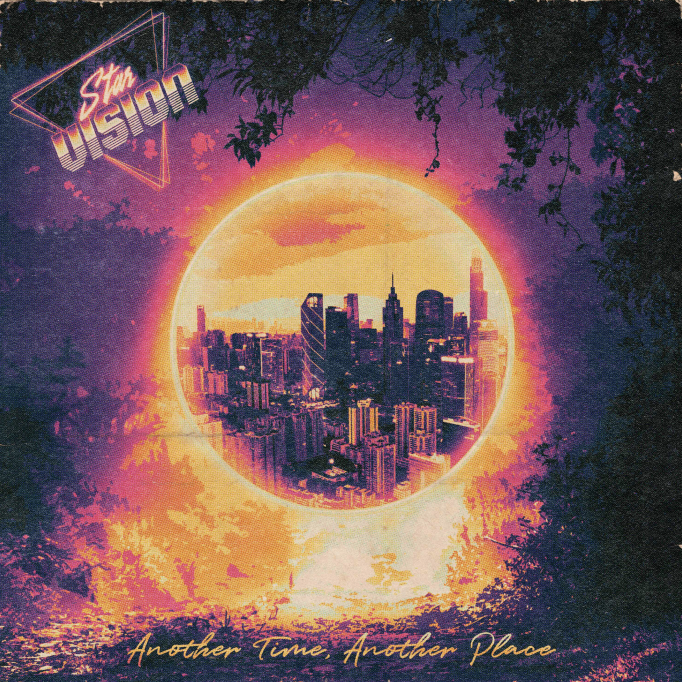
Star Visions New EP entitled ‘Another Time, Another Place’ will be available to listen to in full on the 31st March 2023.